
The Daughters of Sabbareen
I was approached by my good friend Mohammad Abu Hawwash when I announced that I was looking for grandparents to photograph. On a Tuesday morning soon after, I found myself driving north with Mohammad to his childhood home in Irbid, where his grandmother lives.
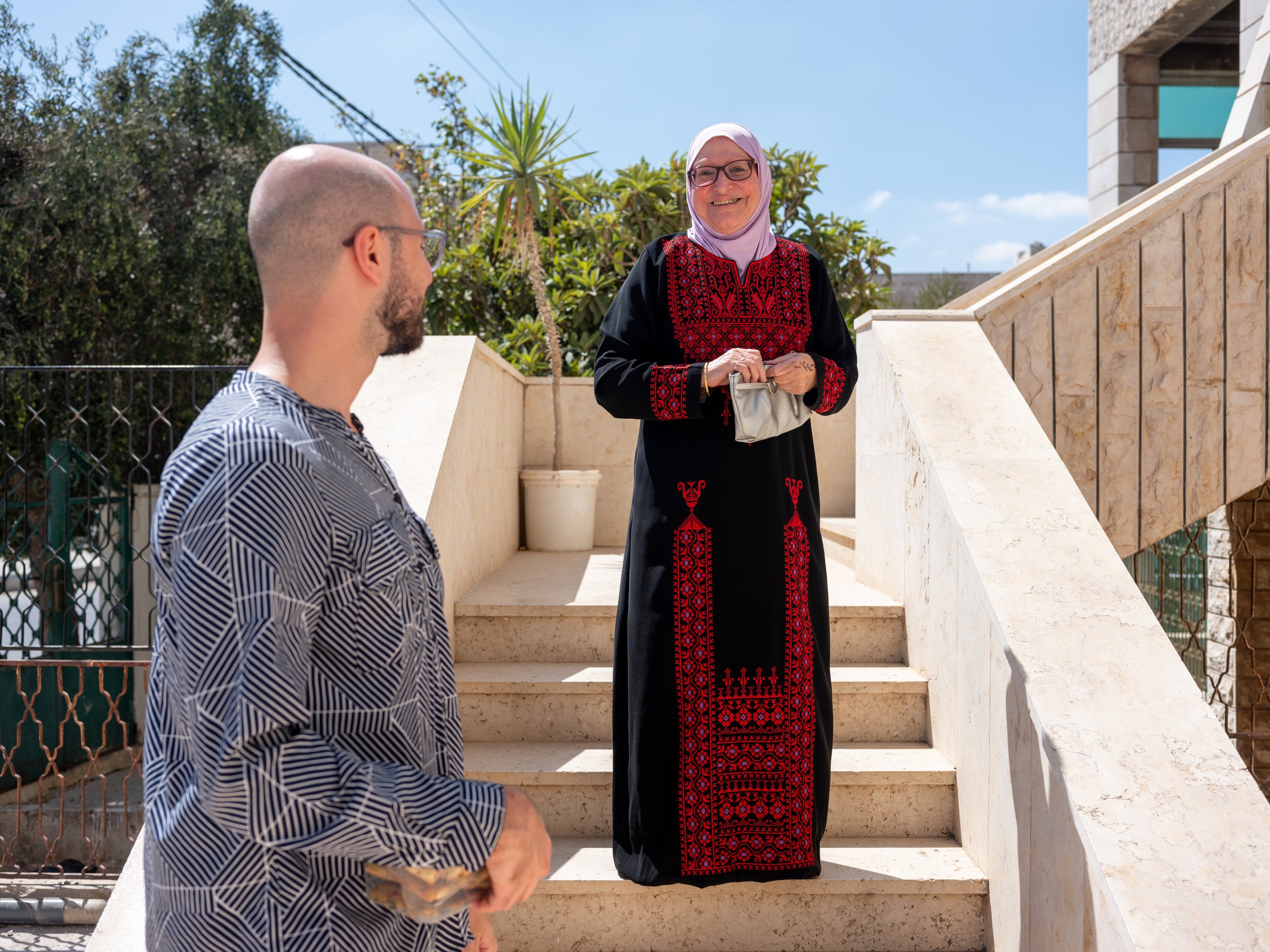
Um Ihab Hattab, embellished in our traditional Palestinian tatreez dress.
We arrived with a feast prepared just for us. Nothing is more delicious than the cooking of a grandmother. She made fatayer of every kind.
Despite the fact that we already had breakfast, it was an offer with only one option. We ate to our desire’s delight and to our stomach’s limit.
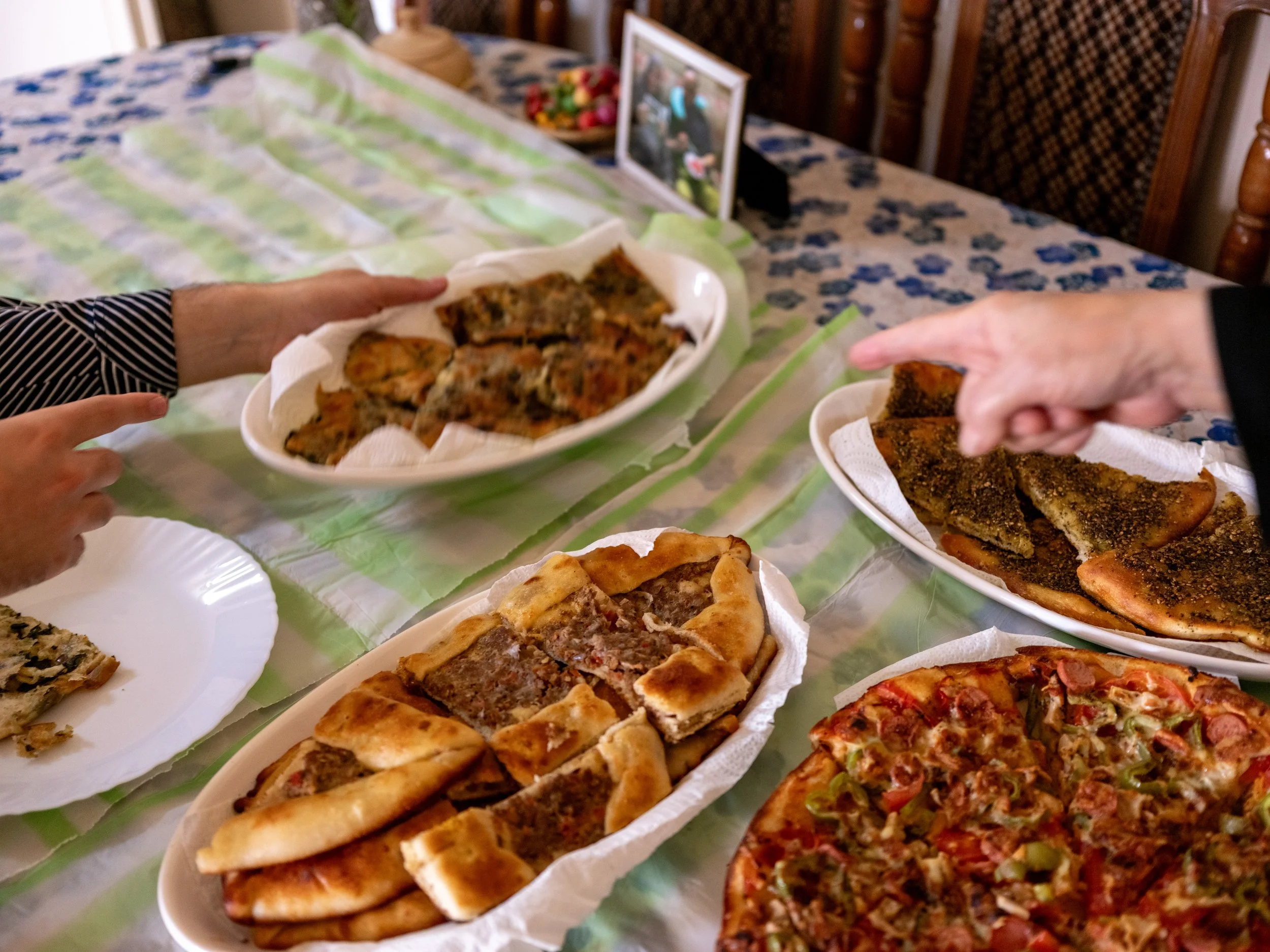
She made sfeeha, zaatar, mtabba’ zaatar, and pizza
As we ate, I looked around the living room to see the small details the house was decorated with. Memories and aesthetics of old homes build over time. When did they hang that photo? What pushed them to find a frame for it? What does it remind them of every time they look at it?
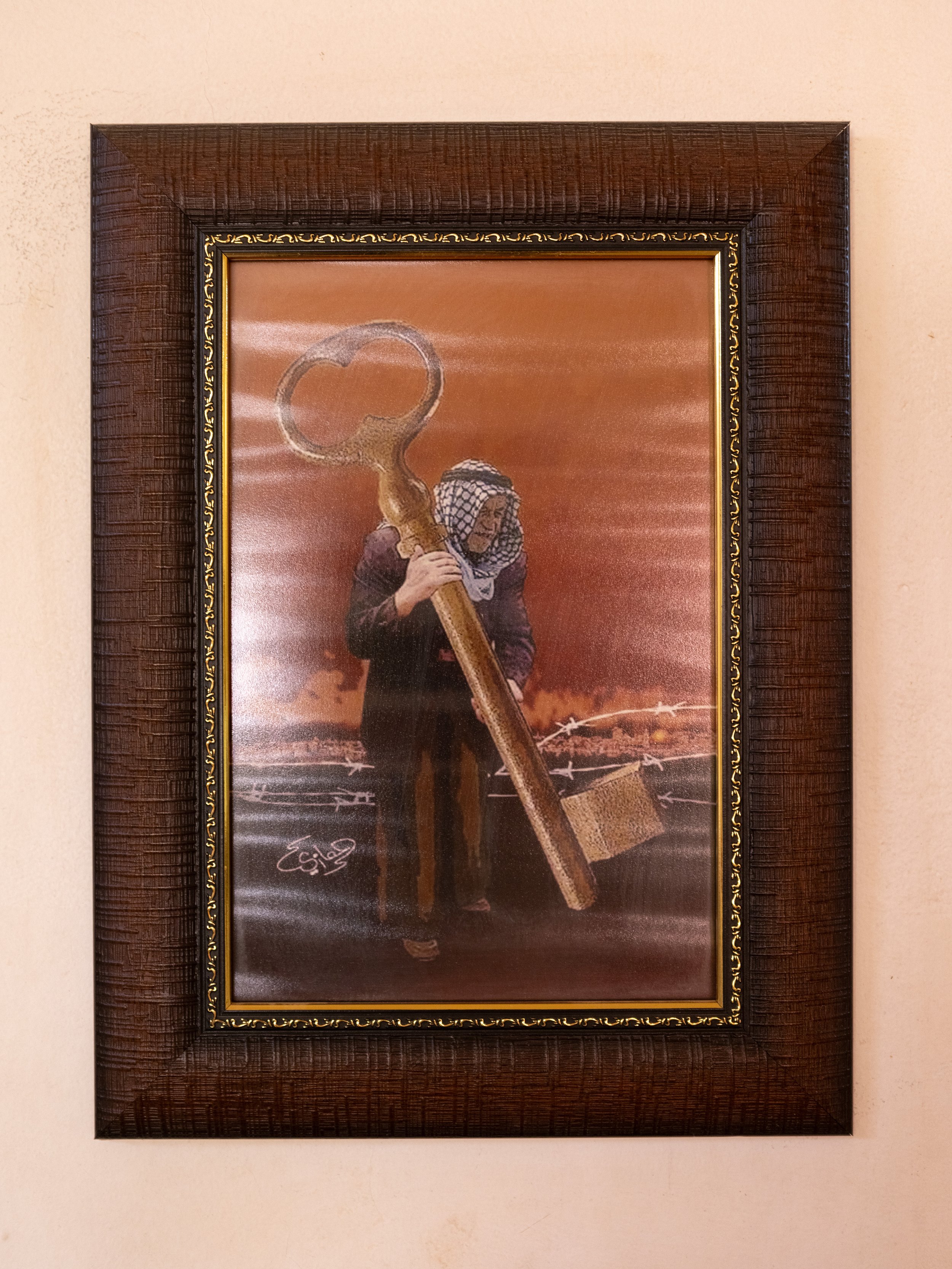
Framed above the dining table
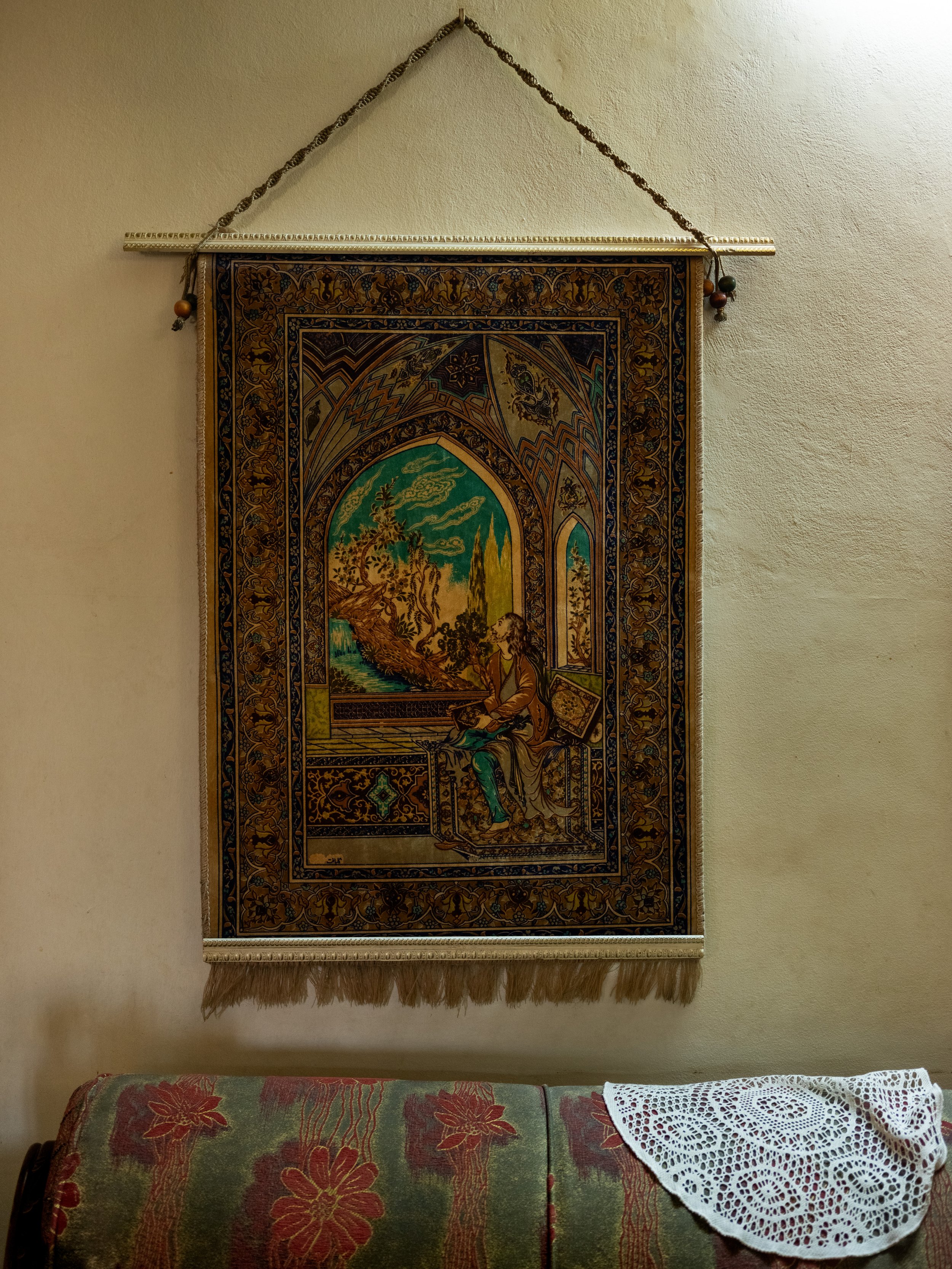
Might be Omar Khayyam, enjoying nature’s creation
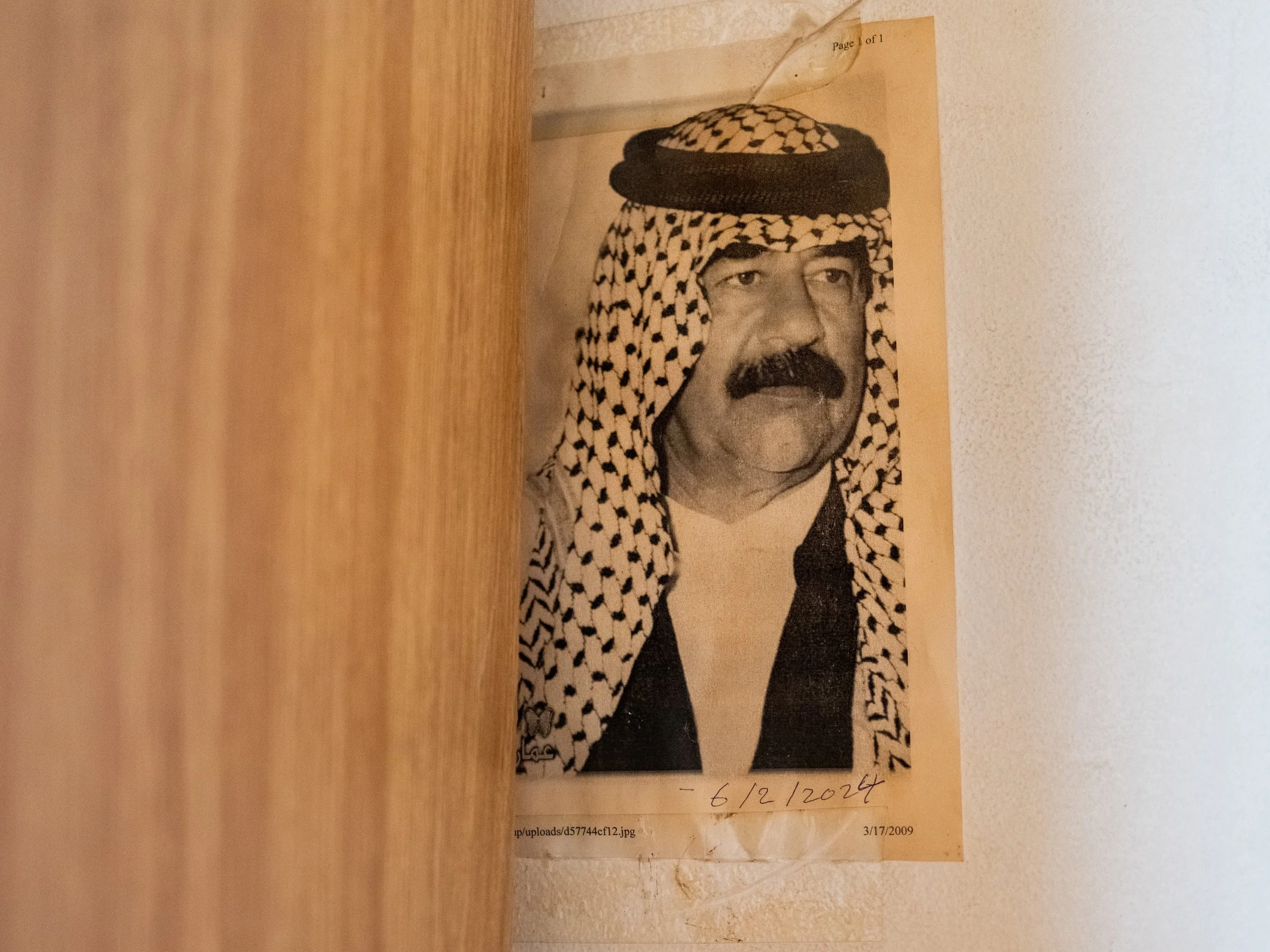
Placed behind a dresser in the family room. It was printed in 2009.
After breakfast, we sat down, she served us fresh juice, and with camera in hand, we spoke about her past.
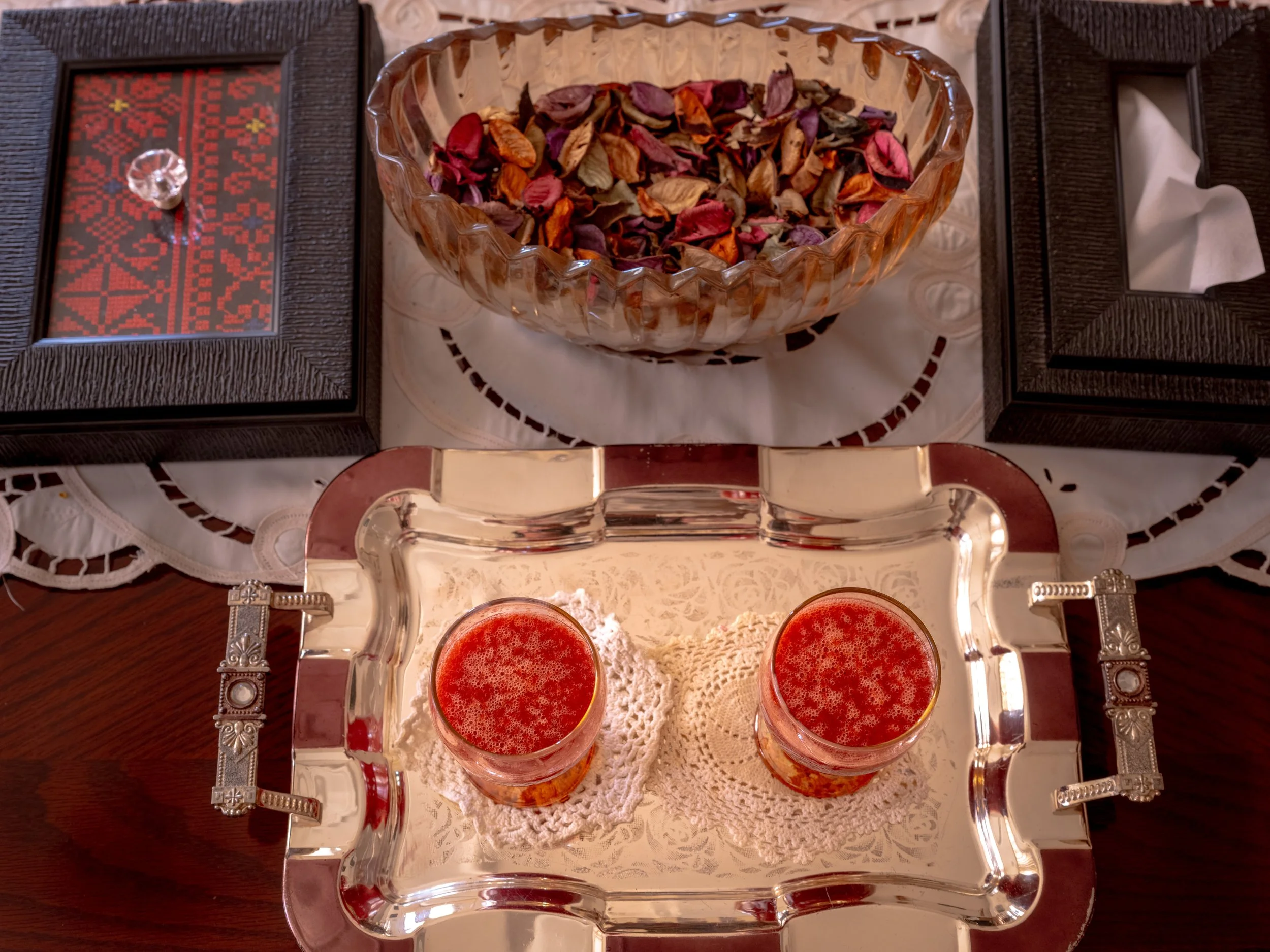
How juice is presented on the table. My grandmother has her own rendition of this.
She was full of enthusiasm, she wore her Palestinian abaya, and sat with pride. We talked about her husband, a renowned teacher of the English language, where he taught in the UAE, back when Dubai was still in its early days.
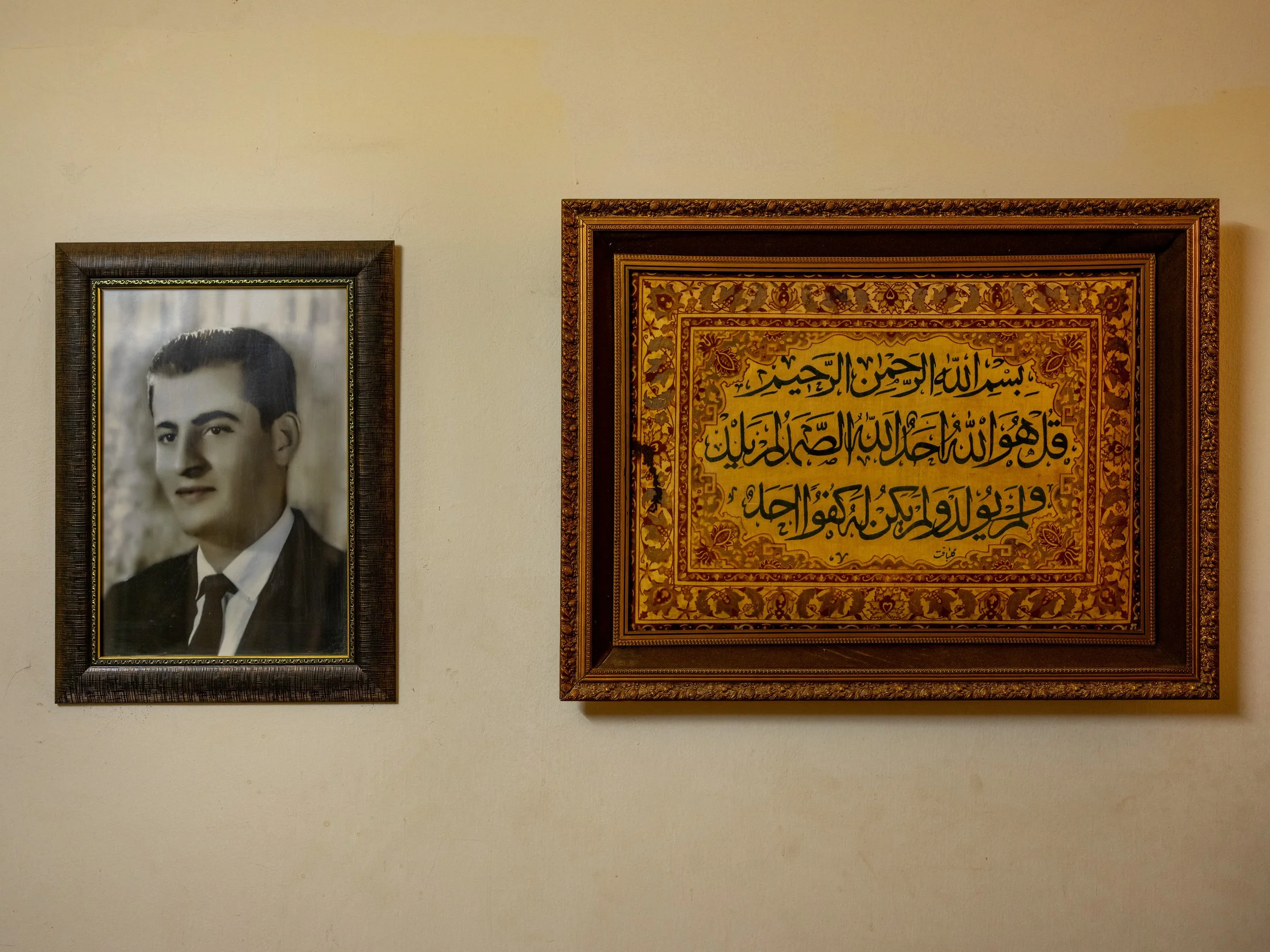
Mohammad’s grandfather, next to Surat al Ikhlaas from the Quran
She had her childhood in Russeifa, a city north east of Amman. I do not know much about Russeifa, but it is the city that connects Amman to it’s urban counterpart, Zarqa. It has beautiful hills and is on the edge of the white and yellow eastern desert of Jordan. She recalls how beautiful the area was at that time, with water running free, fish swimming in the river, and fruits and vegetables everywhere. This is a description far from how others would describe the area now.
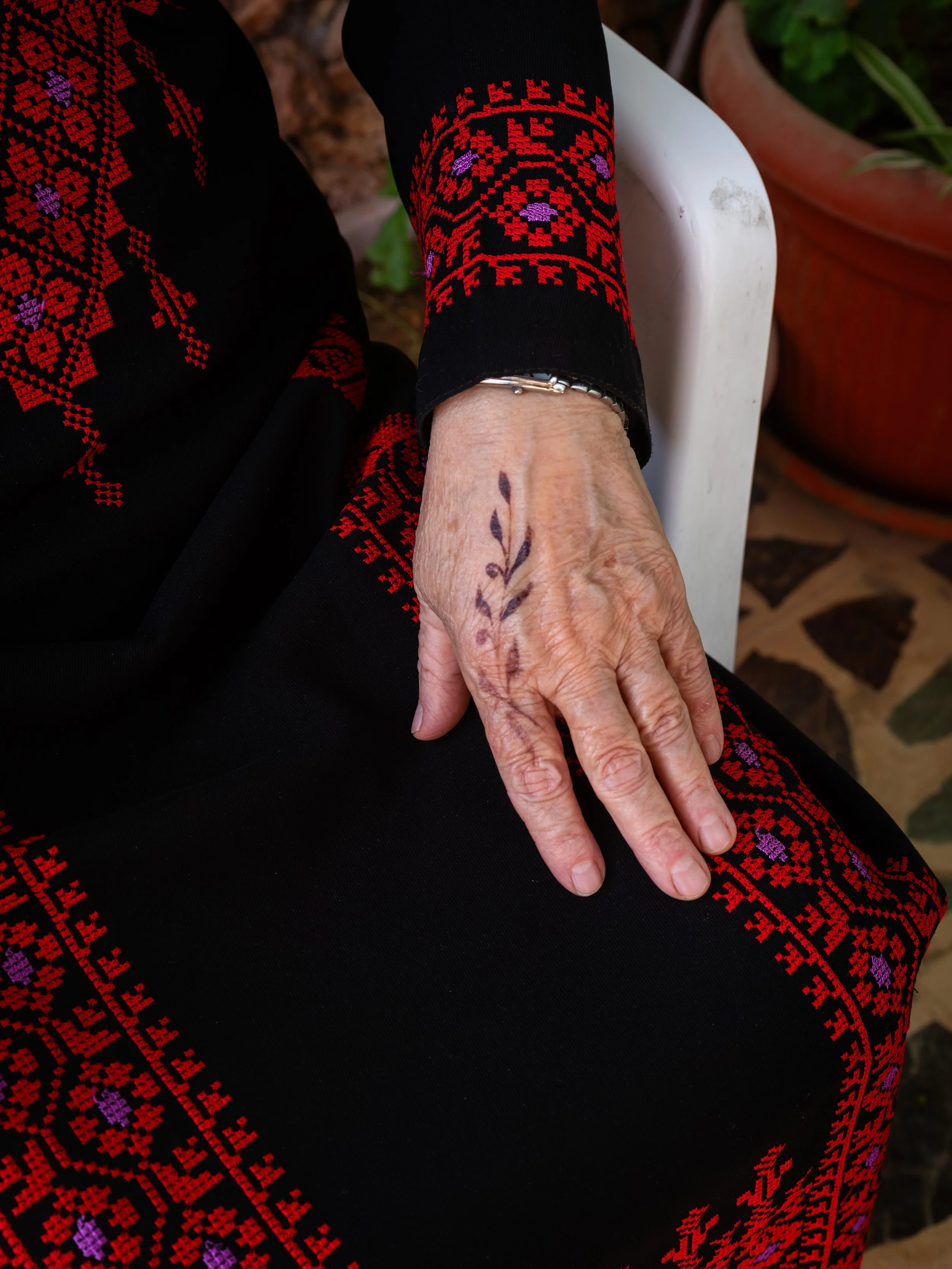
What remains from her granddaughters henna party
She then invited us to the kitchen to have coffee. As I enter, I look again for the details that makes a grandmothers home so grandmotherly.
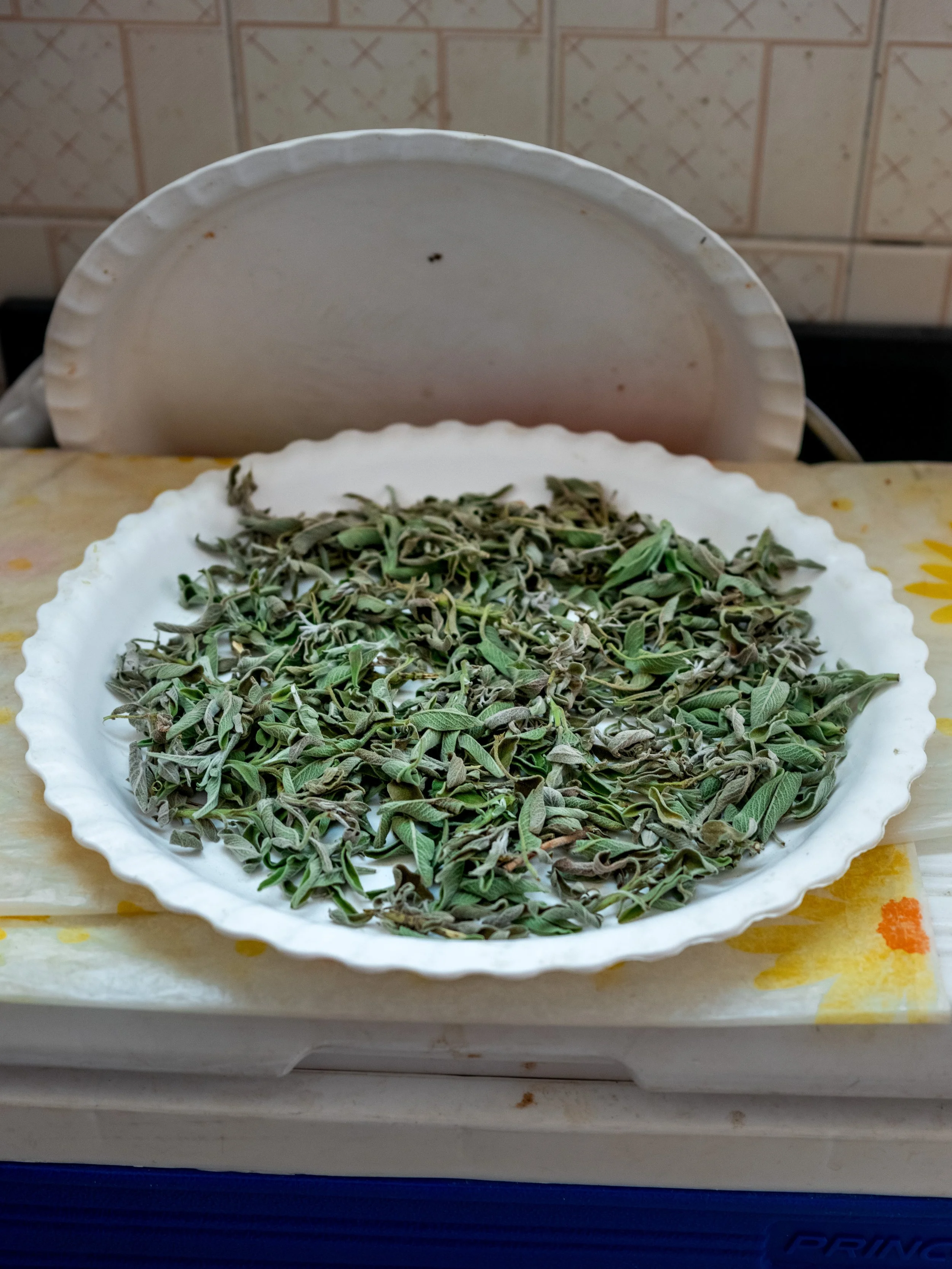
Miramiye, sage, for tea
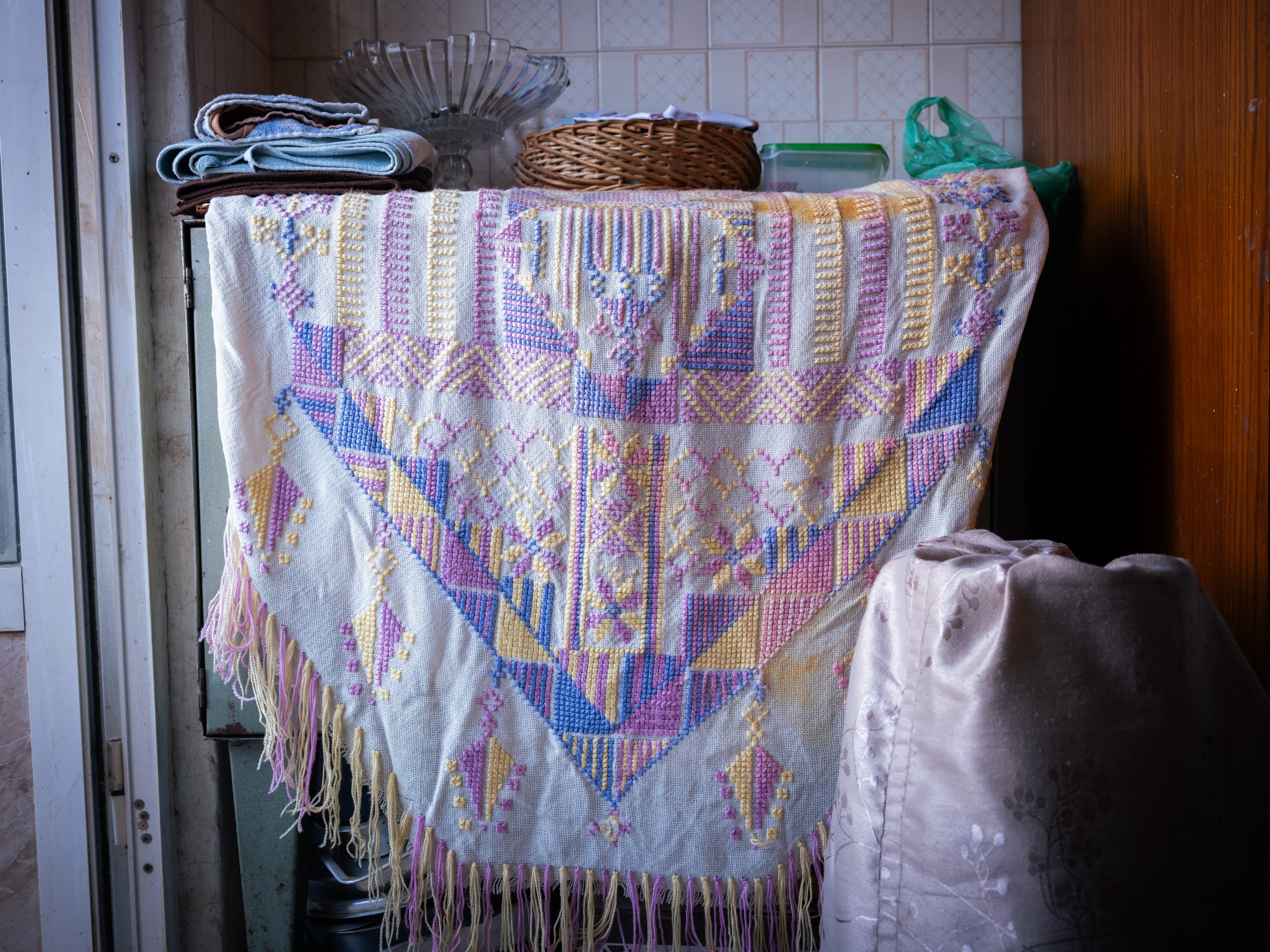
What covers the large gas oven
She showed us the balcony that overlooks the olive trees that reside next to her. She showed me her precious rock. A rock that she has been with her for many years, breaking open the olives to make pickled olives from, or kabees. It was just a rock, yet somehow has remained with her for all these years, and for that reason, stays with her and was worth sharing with me.
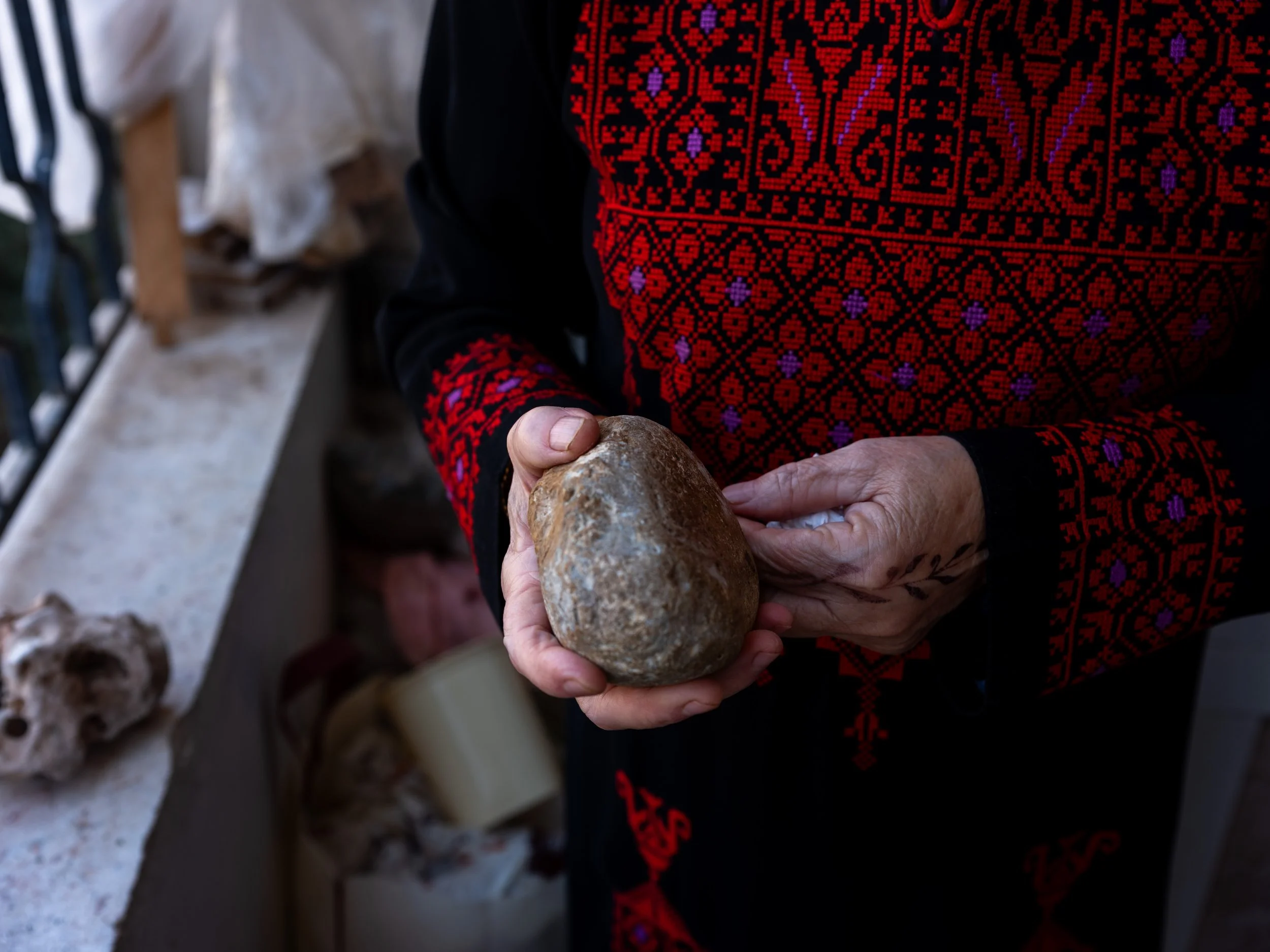
The rock fits her hand perfectly.
She made coffee for us three, and sat down to talk about what Arab grandmothers usually talk about, family and politics.
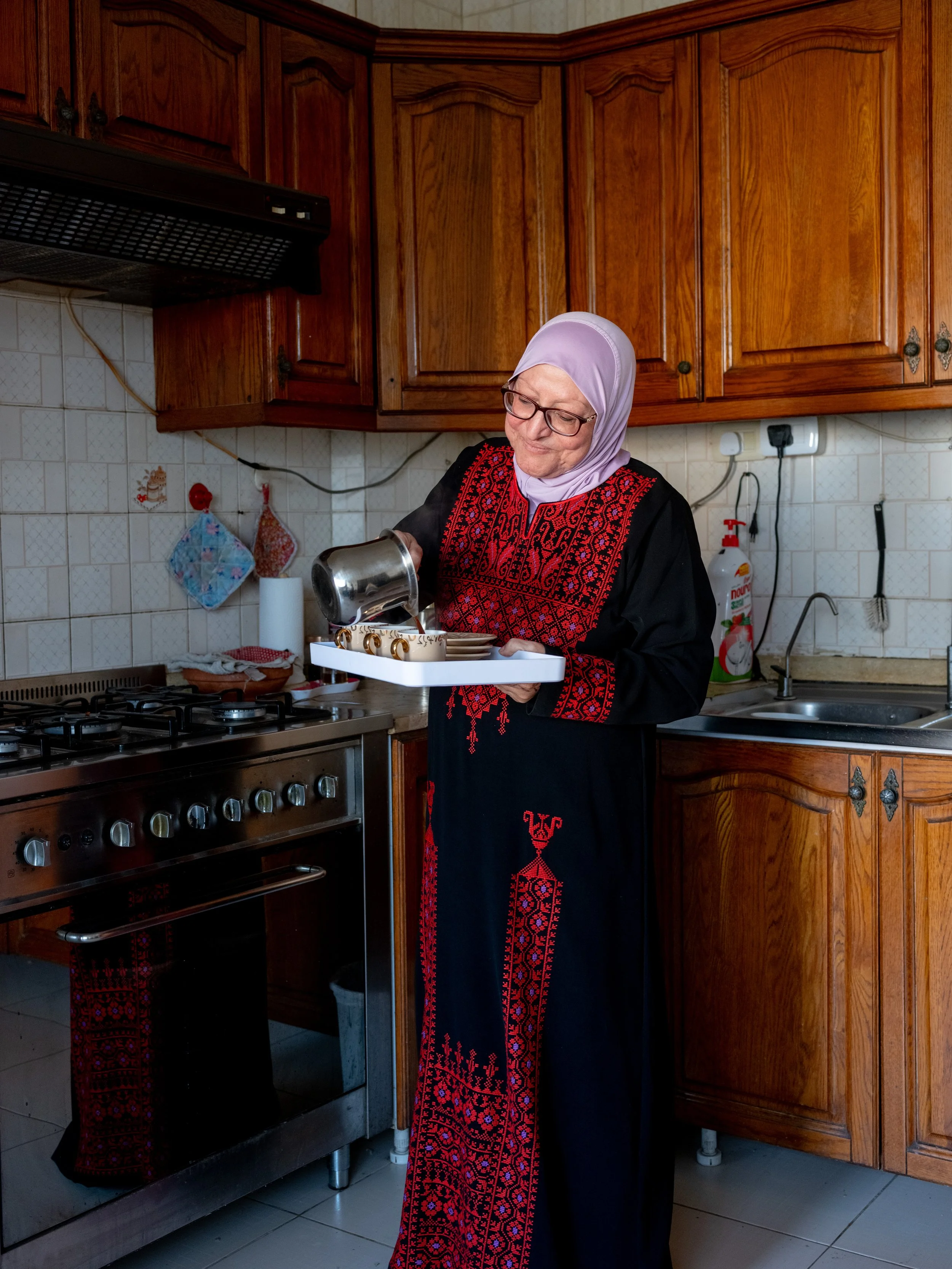
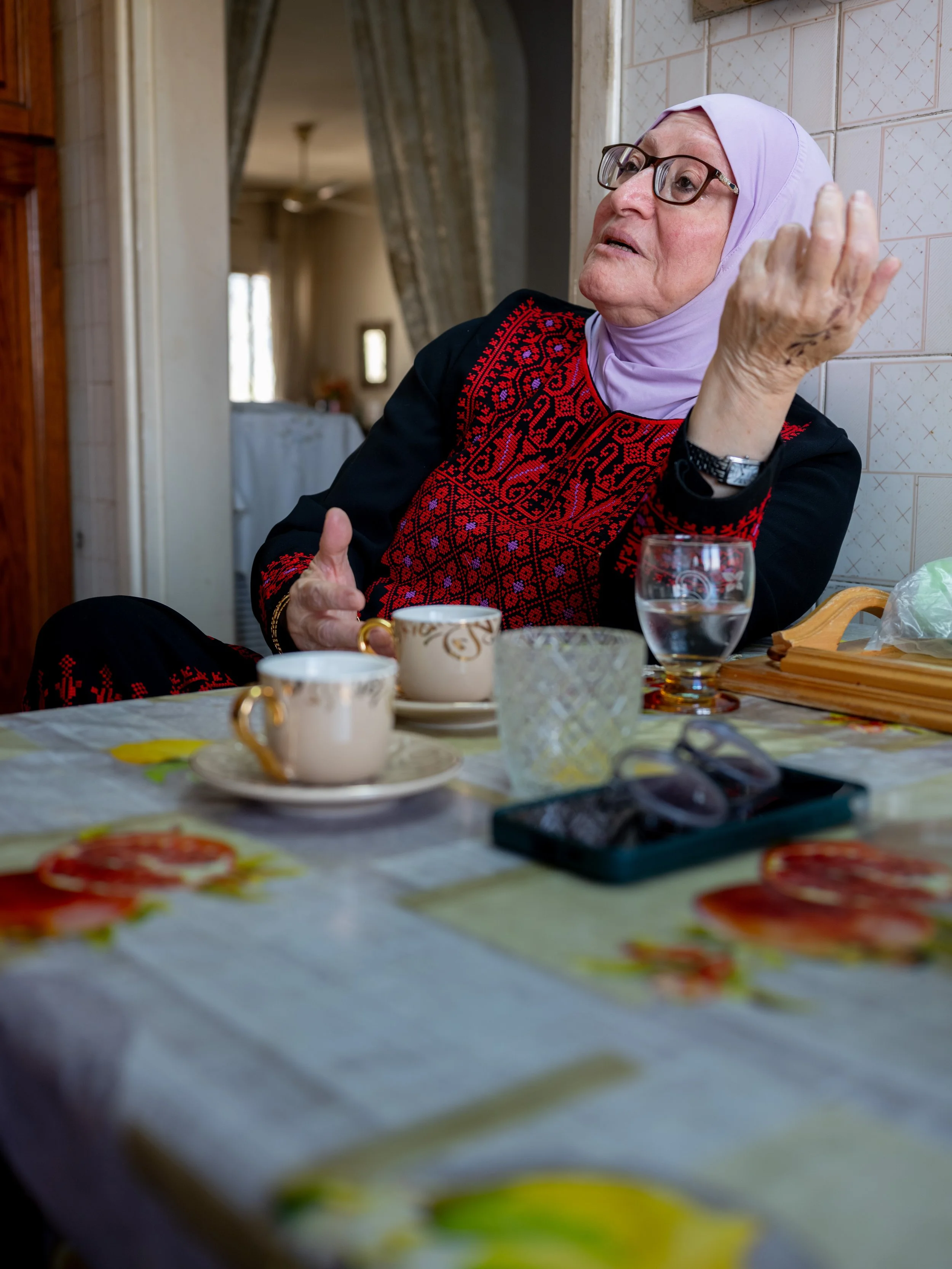
After our fifth sip or so, we decided that it would be nice to drive to where she worked for many years of her life. Within a couple minutes we were out the door.
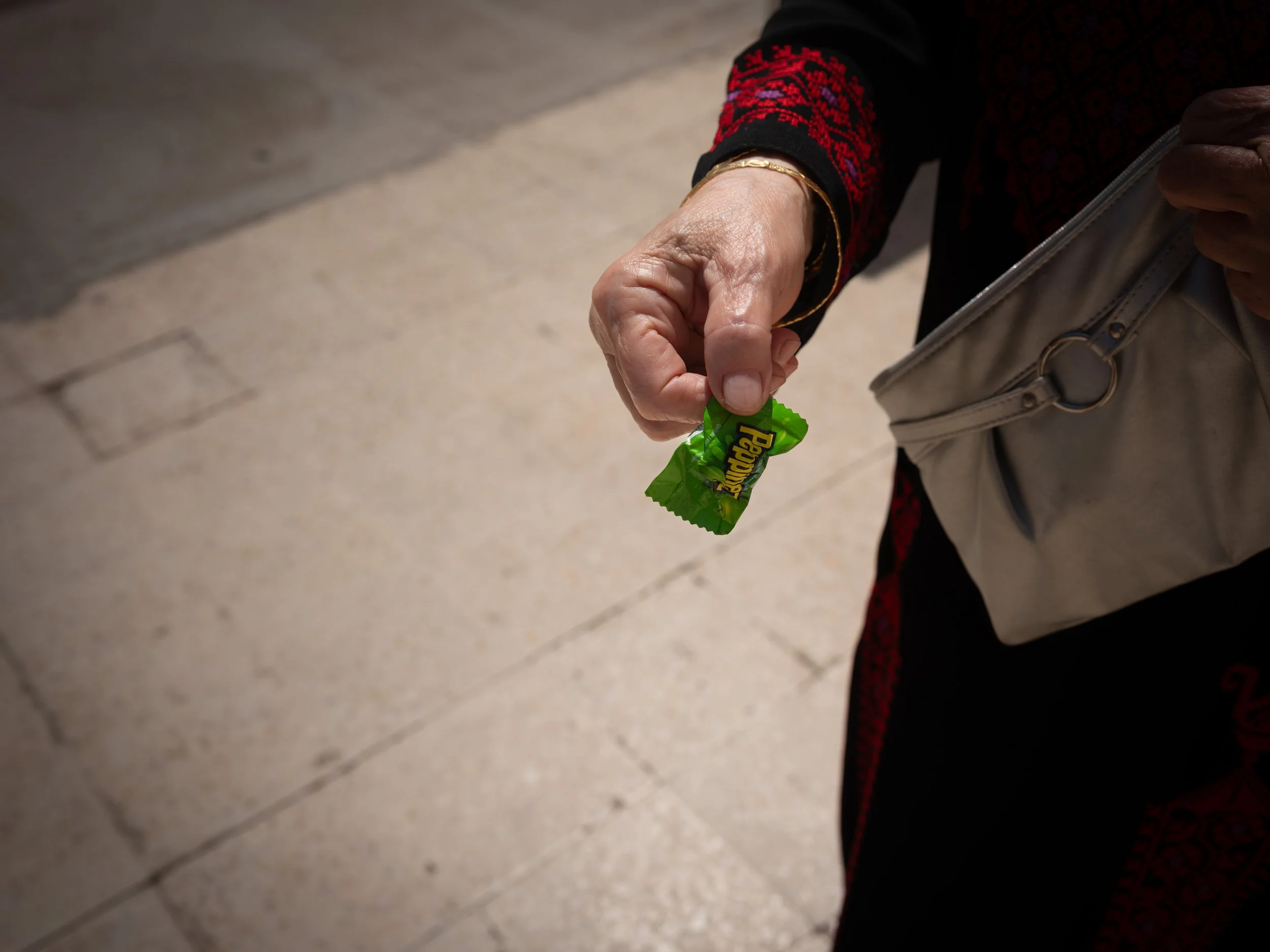
Before entering the car, she hands me a piece of candy taken from her bag. A staple for grandparents from around the world.
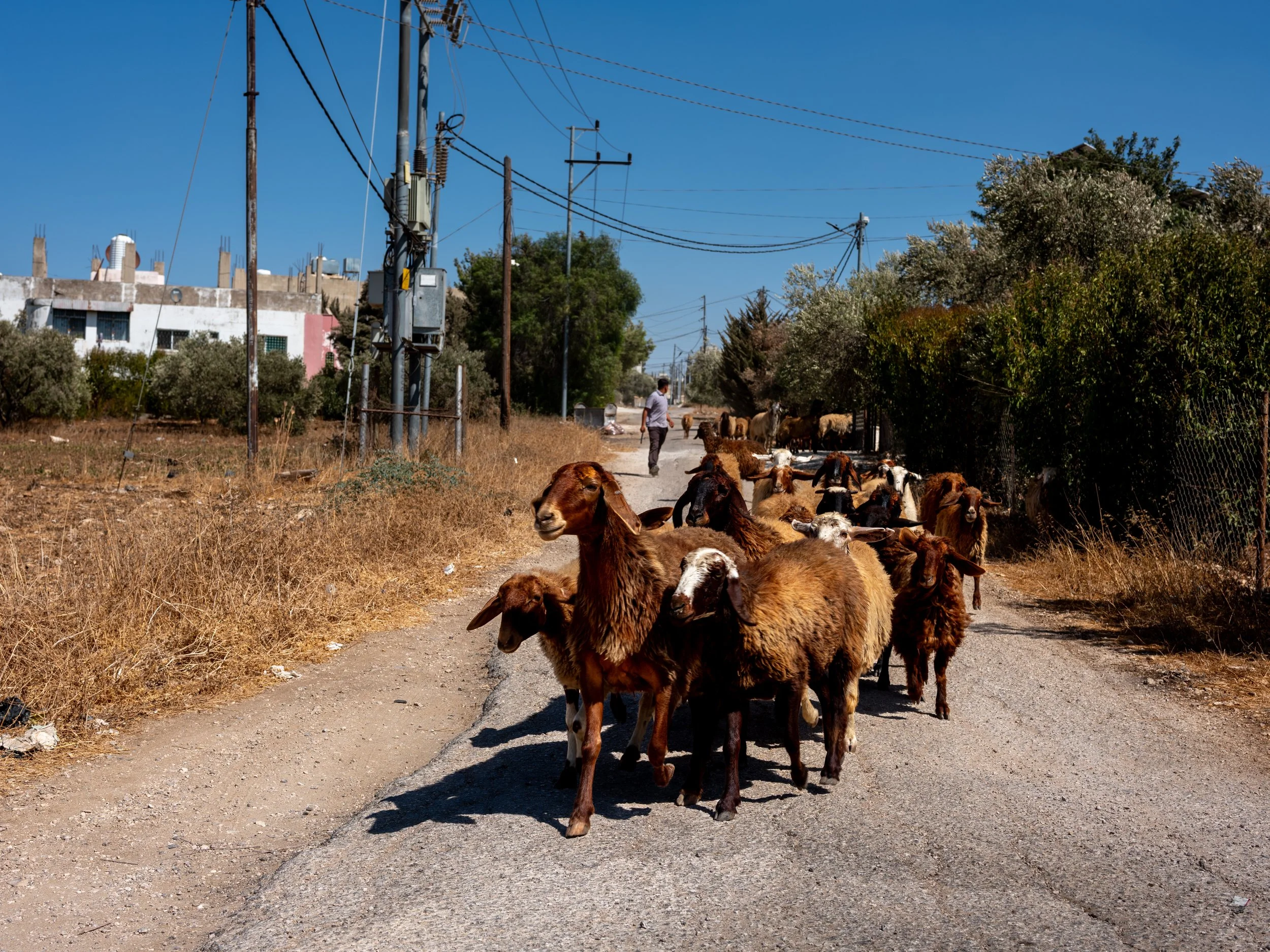
Arriving to the school, we were greeted by beautiful creatures.
Meaning is created where there is connection. Here, Um Ihab created connection with many students of the rural area at this school. We walked around the school and I watched both Mohammad and Um Ihab reminisce about where the kids would run around the olive trees nearby during their break.
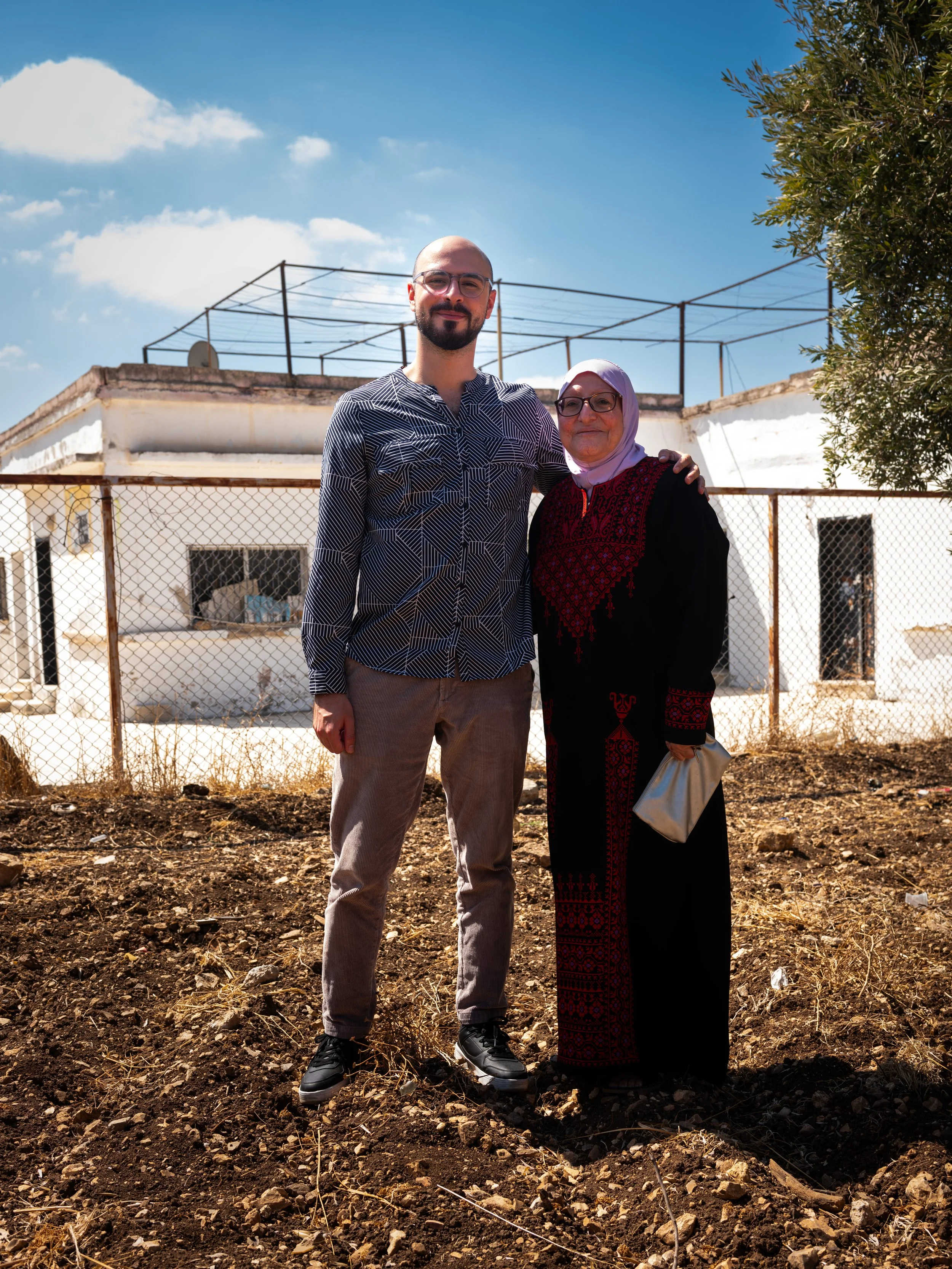
Mohammad and his Grandmother in front of Al Wasfiya elementary school (الوصفية الابتادائية) where Mohammad attended and she taught.
That marked the end of our time with Grandmother Abu Hawwash and the beginning of our new journey south east, towards Russeifah to meet Mohammad’s great Aunt, Um Ayman.
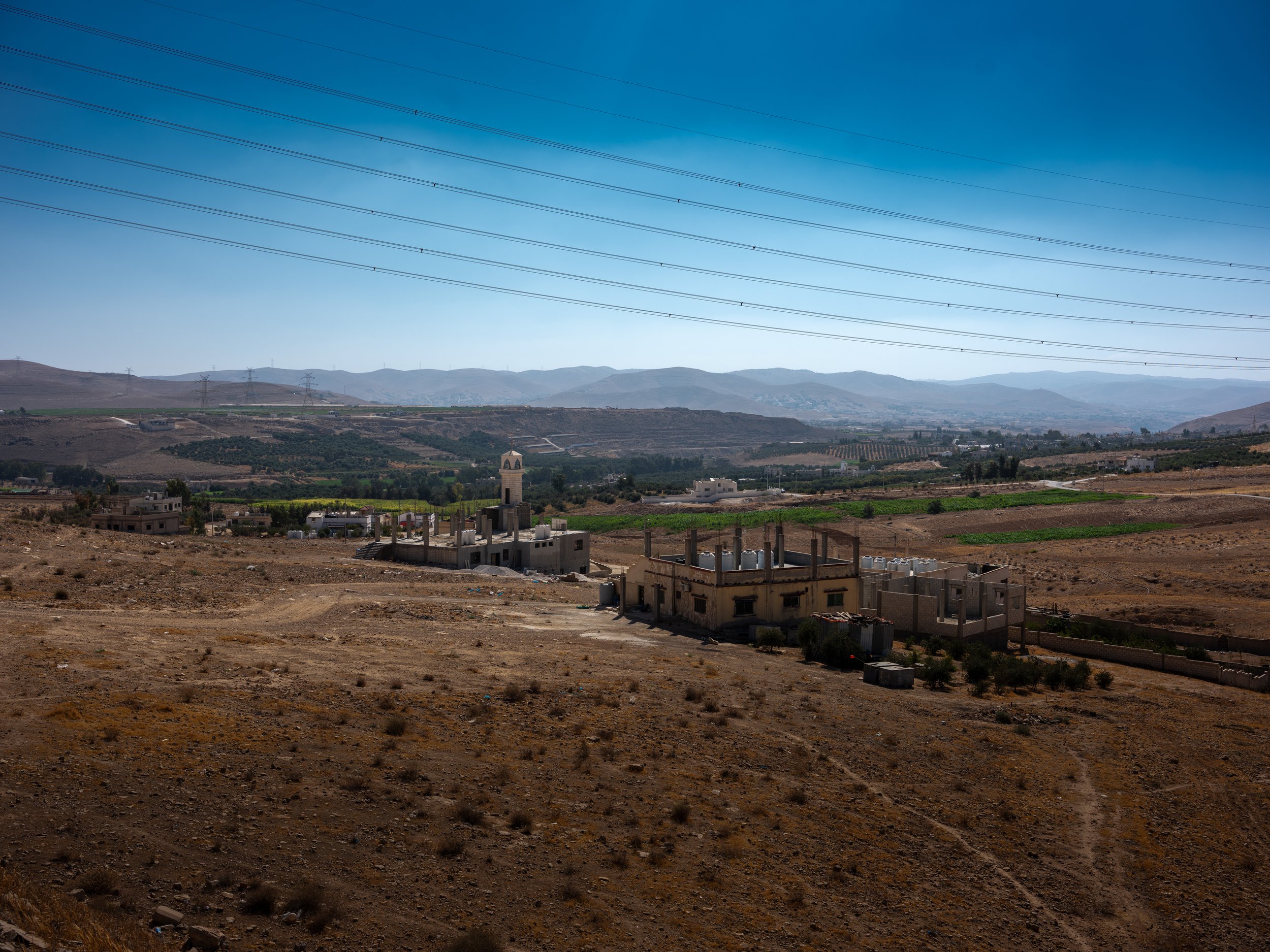
On the way to Russeifah
With a totally different vibe, we arrived to their home with a large dish of msakhan on the table waiting for us. We humbly entered and promptly sat on the table for a feast . The chicken, onion, and sumac combination was delightful.
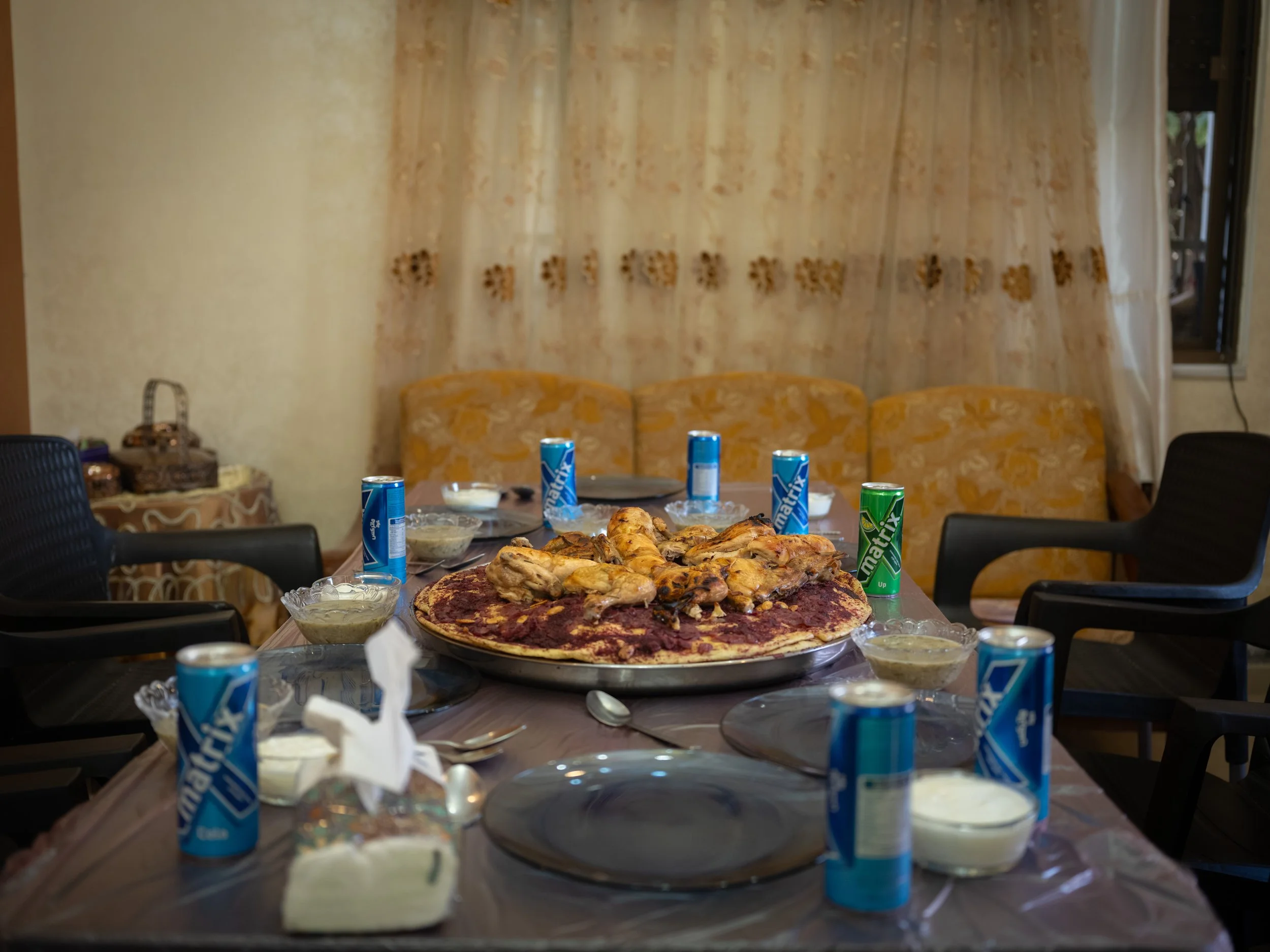
A sign of generosity and tradition
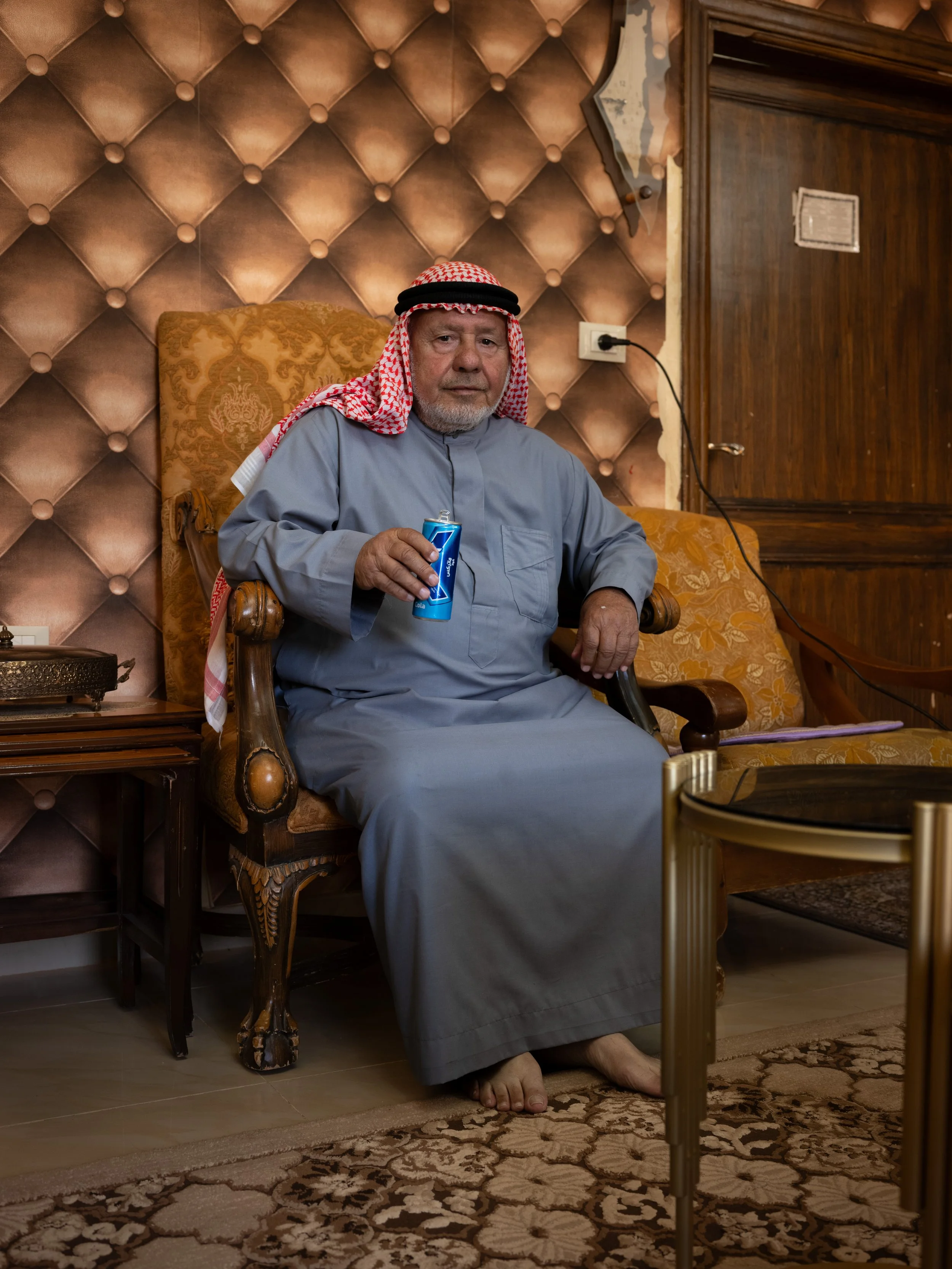
Abu Ayman, post-lunch, with a matrix cola in hand
We sat down after some coffee to hear her story. Born in Sabbareen, a village 28 km south of Haifa, she was displaced when she was 1 and moved to a town called Pharoan. Shortly after, she moved to the refugee camp in Tulkarem for a number of years before heading off to Russeifa. Her husband worked mostly in Libya, and they remain in Jordan until today.
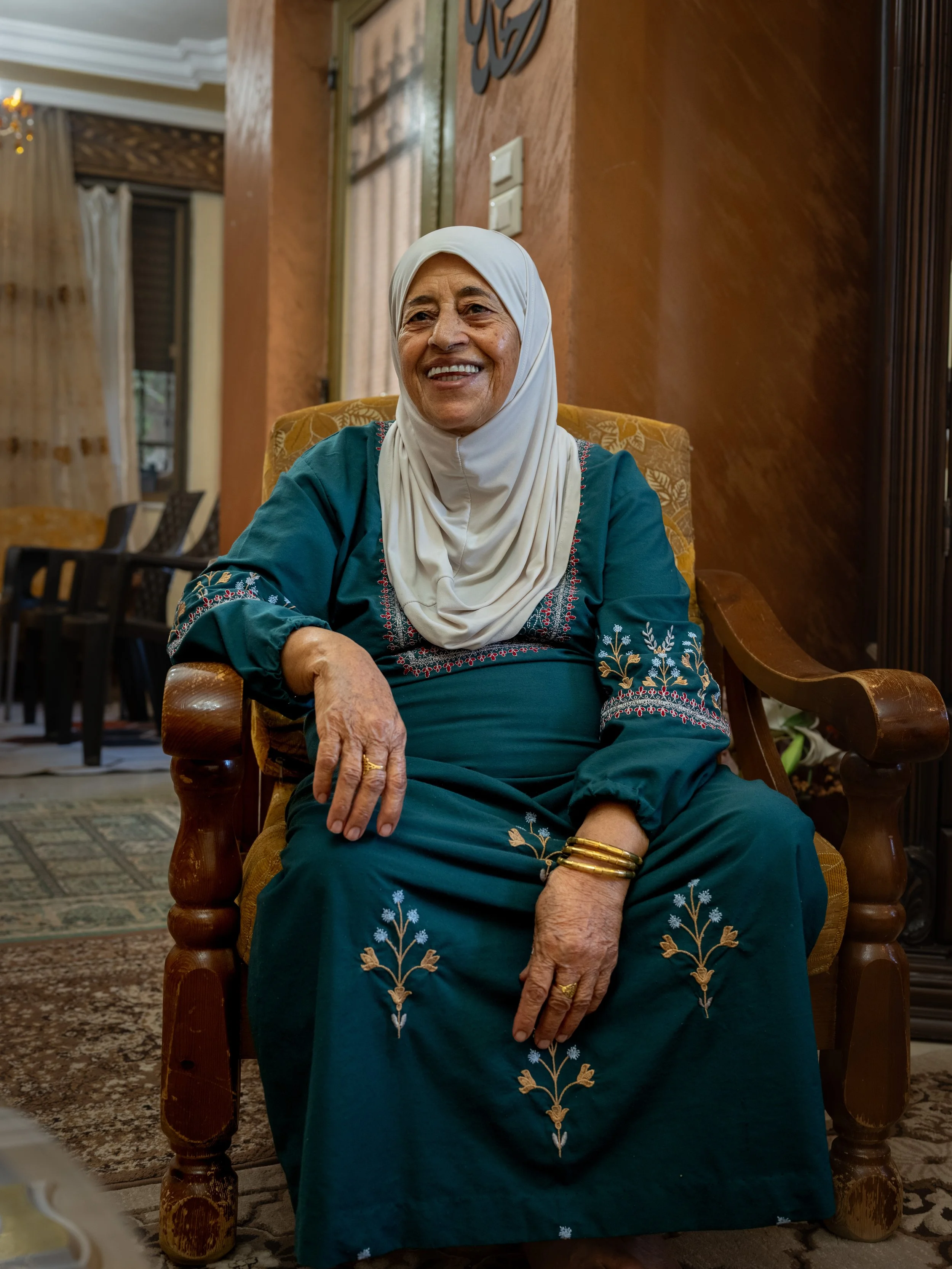
Um Ayman, dressed in the comfortable traditional dress.
We sat outside and took a number of photos of the children and their cat to end the evening. Grandchildren who have the privilege of spending time with their grandparents inherit their stories and energy, carving the future with the echoes of the past.
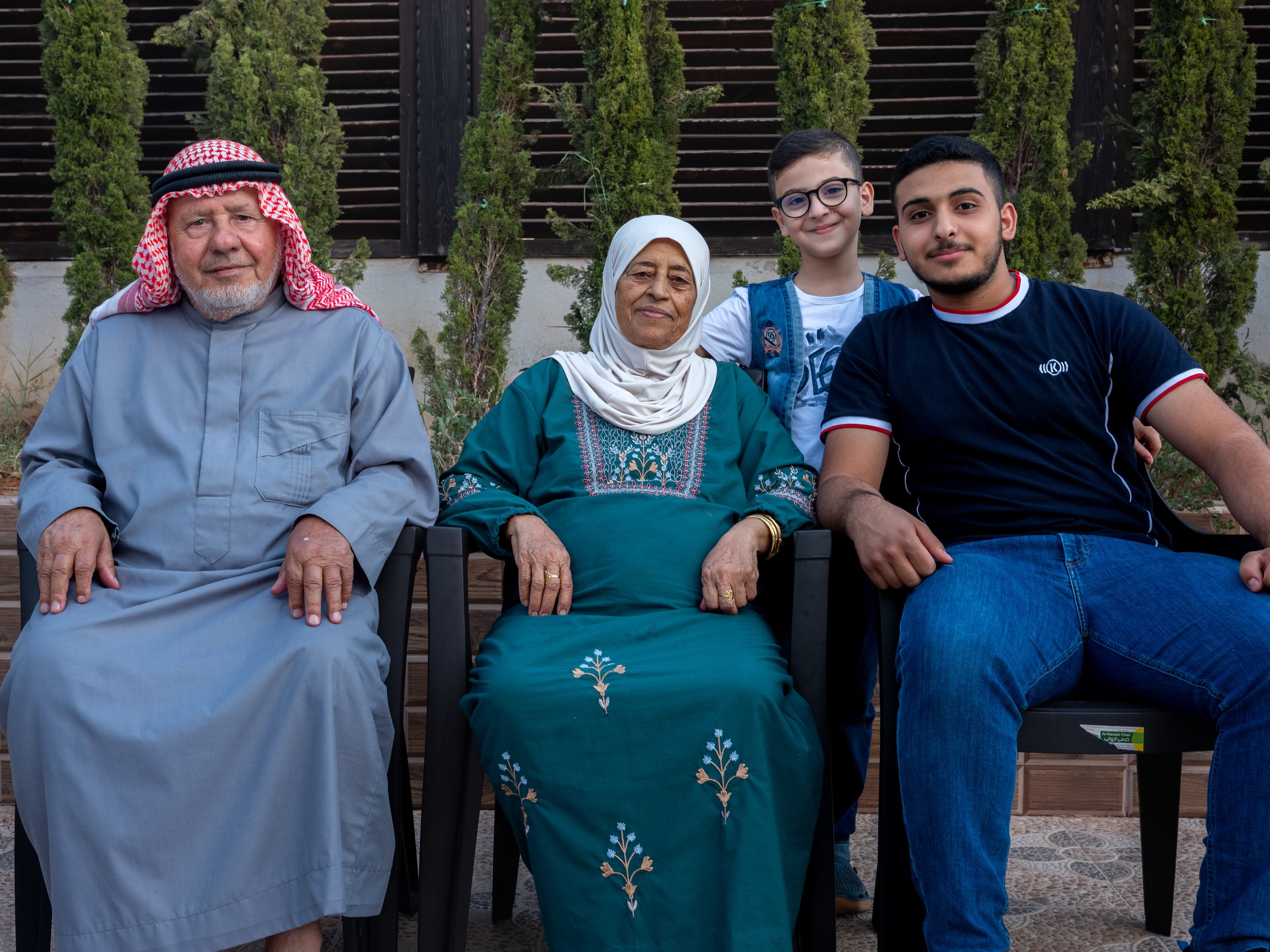
With two of their grandchildren
One subject I found common between the two grandmothers was Sabbareen, where they both came from. Sabbareen is currently non-existent. Like many other towns in Palestine, violence, gun fights, and killing quickly came to them and were forced to leave as their towns burned to the ground.
Sabbareen was an ancient town that dated back to the Romans and was inhabited during the time of the Crusades and the Ottomans. Like many other towns in Palestine, this town was known for its fertile land and abundant springs. You can learn more about Sabbareen through these links. 1. 2.
I share two short videos of them speaking about Sabbareen.
Through my research, I stumbled upon photos of farmers from Sabbareen from the 1940s, the photos were not taken by a Palestinian, but by a European Jew by the name of Zoltan Kruger.
After a bit more digging, I found out that Zoltan Kruger was an important photographer documenting early Jewish influx into Palestine and the rise of the Israeli state. He took thousands of photos, and saved all his negatives for them to now be distributed among the largest Jewish and Israeli organizations in their archives.
Not much is known about this man on the internet, but Zoltan marks the importance of a photographer in shaping history, and creating a national memory for people of the future. I wonder how the Palestinians he photographed regarded him as a photographer.
These photos of farmers were composed carefully. Taken from a low angle, he had them look towards the horizon away from the camera. What was he having us convey about these men?
The first photo seems to convey a bold heroism with the stark light hitting the face of the mustachioed man. The two other portraits convey a sadness, a longing of some sort. Perhaps Zoltan knew what was to come for them. Perhaps Zoltan was predicting the future through the gaze of these men.
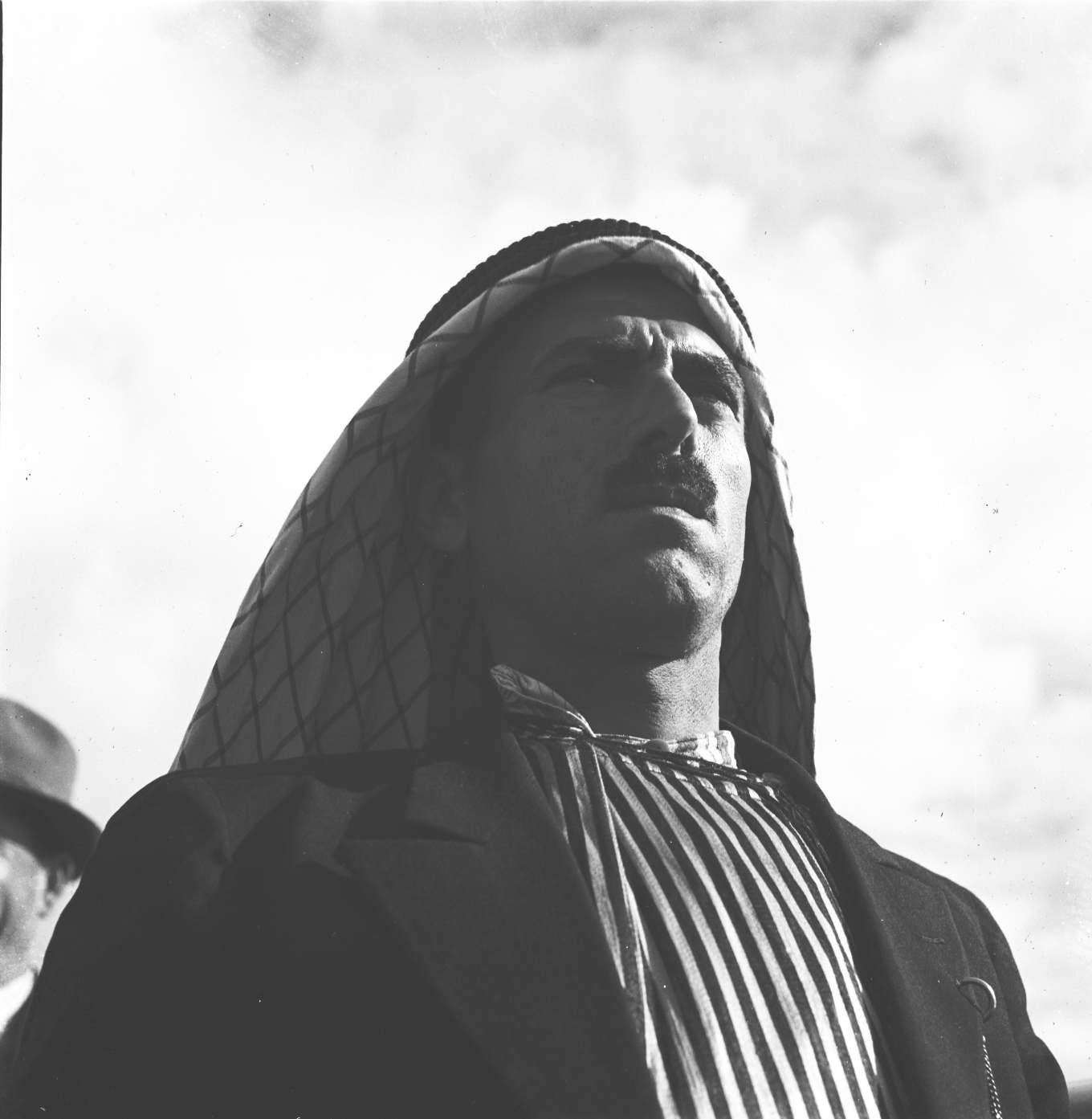
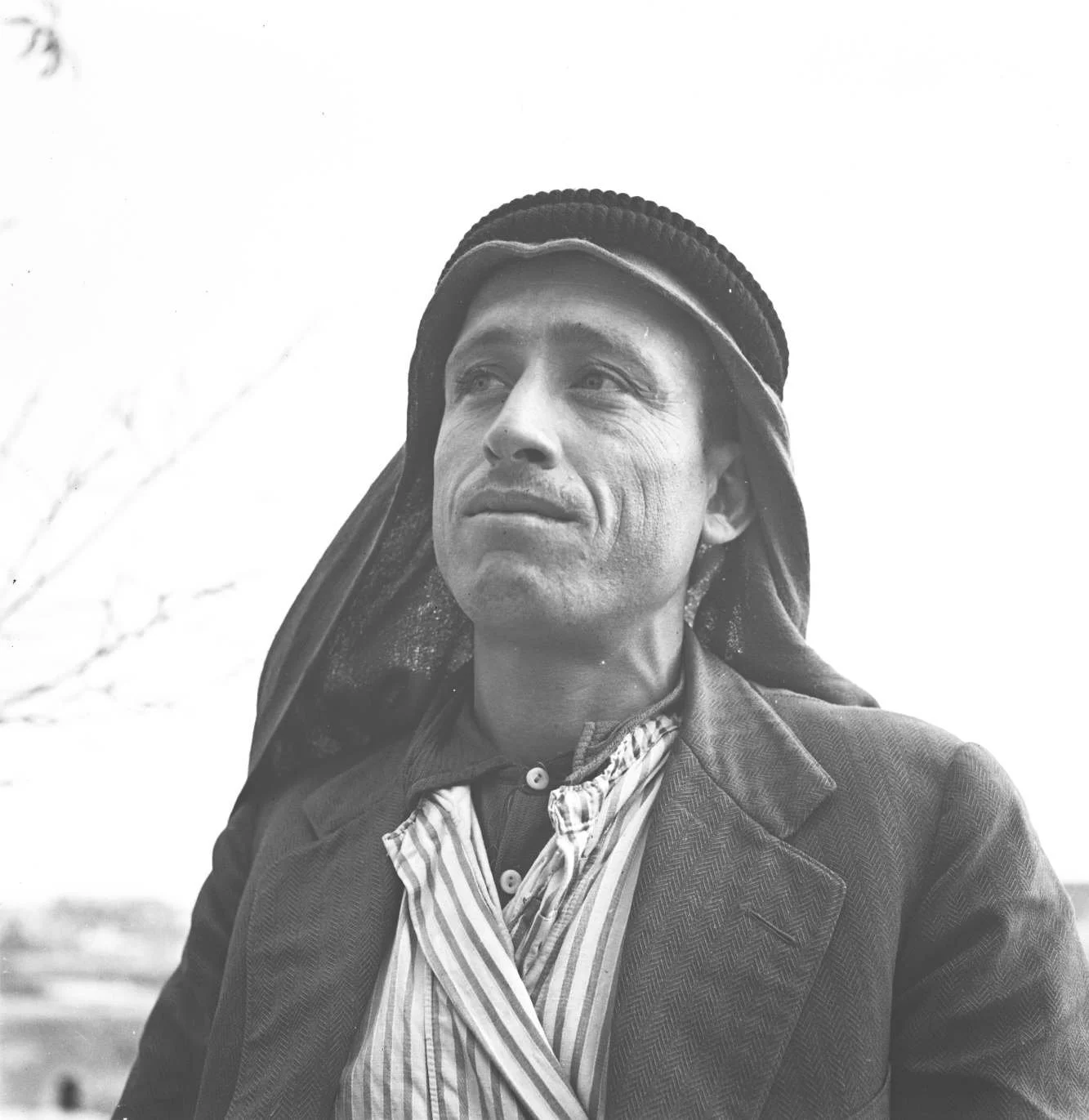
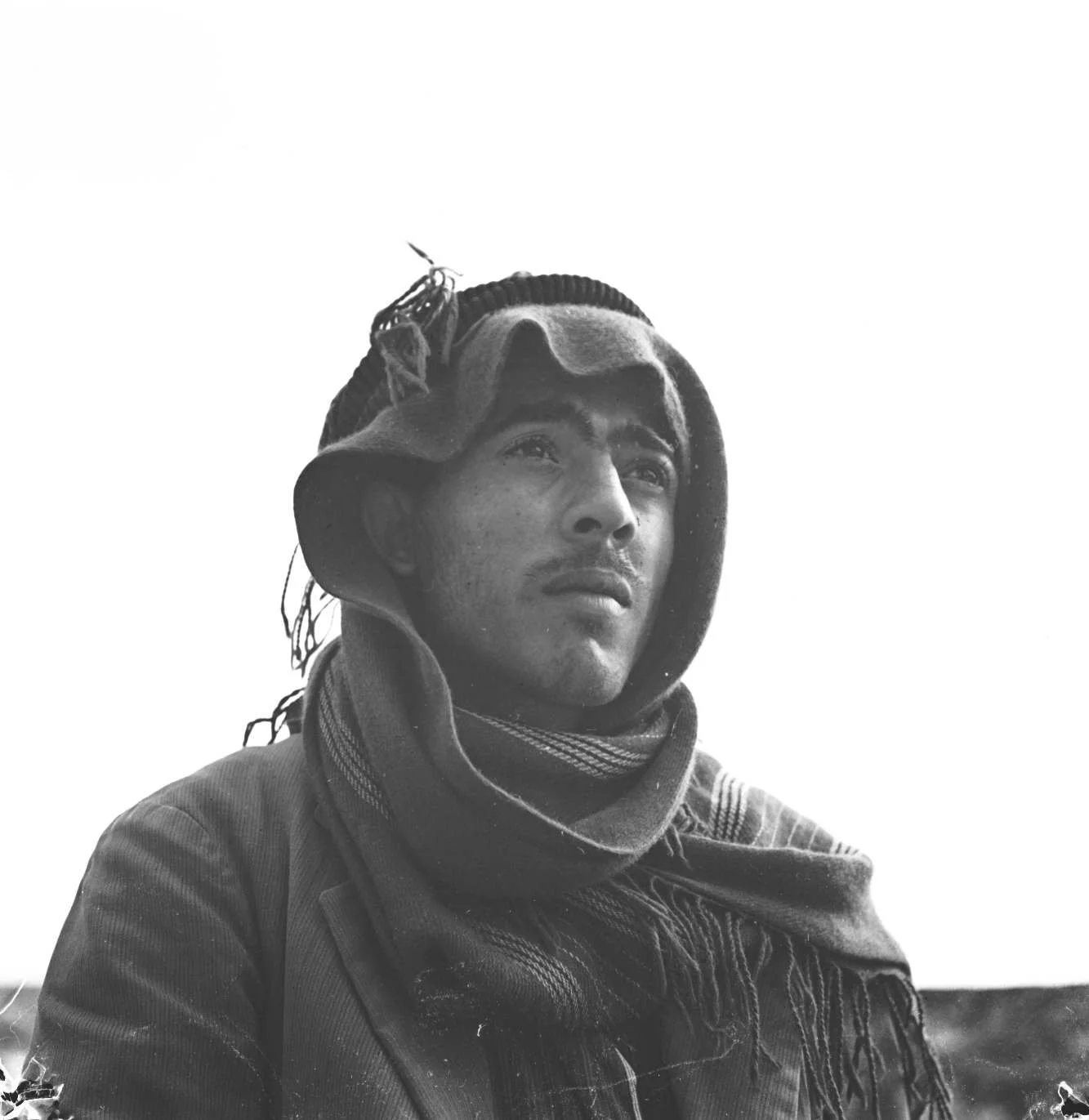
Looking at this Jewish European photographer pushed me to look at some of the earliest Palestinian photographers in contrast. Google’s first search results come with the name “Khalil Raad”, a Lebanese photographer with an equal amount of negatives and plates documenting the Palestinian experience from the late 19th century moving into the 20th.
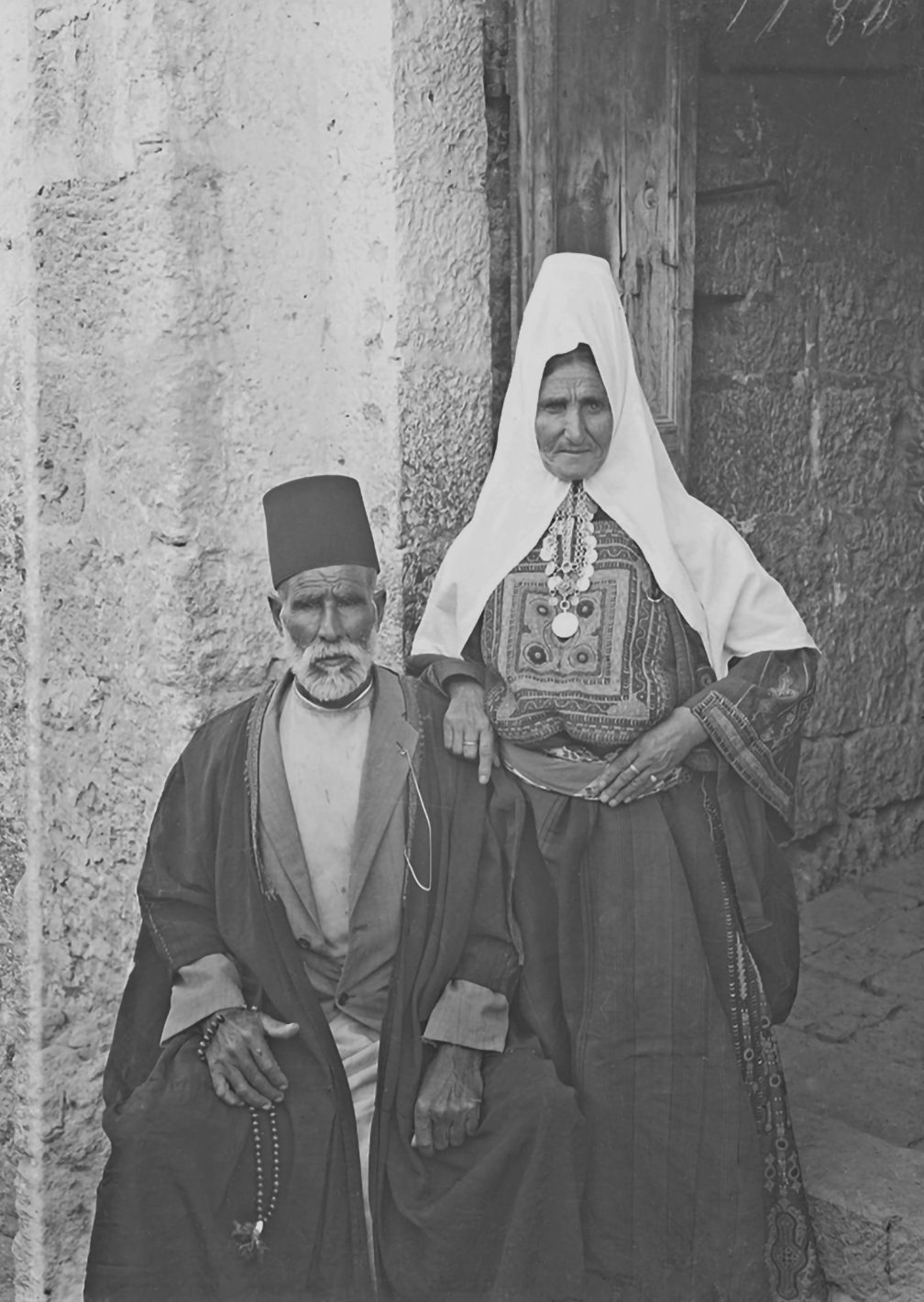
A couple from Bethlehem, بيت لحم in their traditional clothing
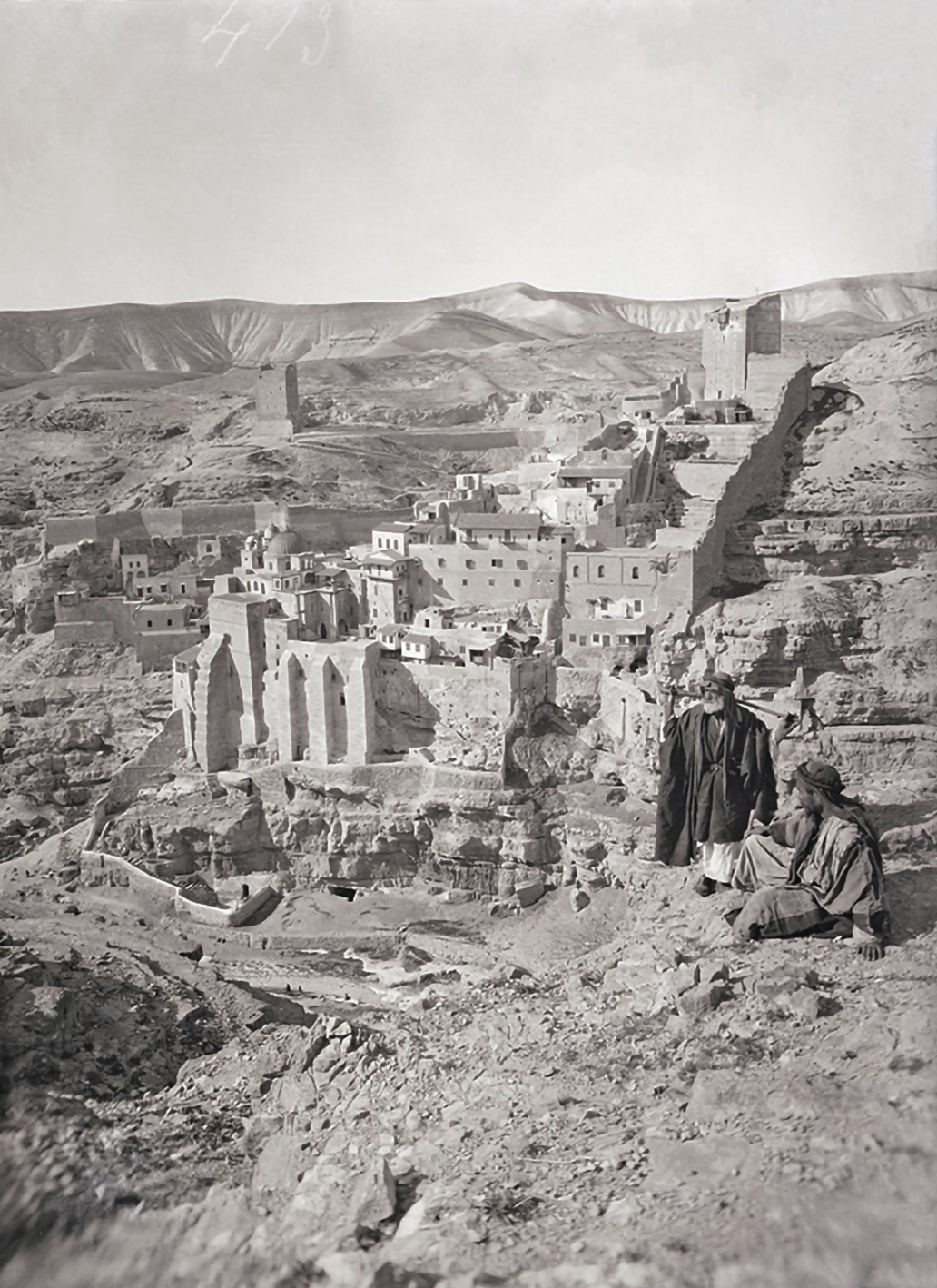
Mar Saba, an ancient monastery in the mountains near Bethlehem
Perhaps this topic is for another post. You never know how one thing leads to another. From driving up north to photograph a grandmother leads you to the history of the photography of Palestine.
I thank Mohammad and his family for opening up their homes and telling their stories. I hold them with the utmost value and hope that the sharing of their stories be useful to someone someday.